FREE SHIPPING FROM €150 • DELIVERY THROUGHOUT BELGIUM • FREE PICK-UP IN ANTWERP
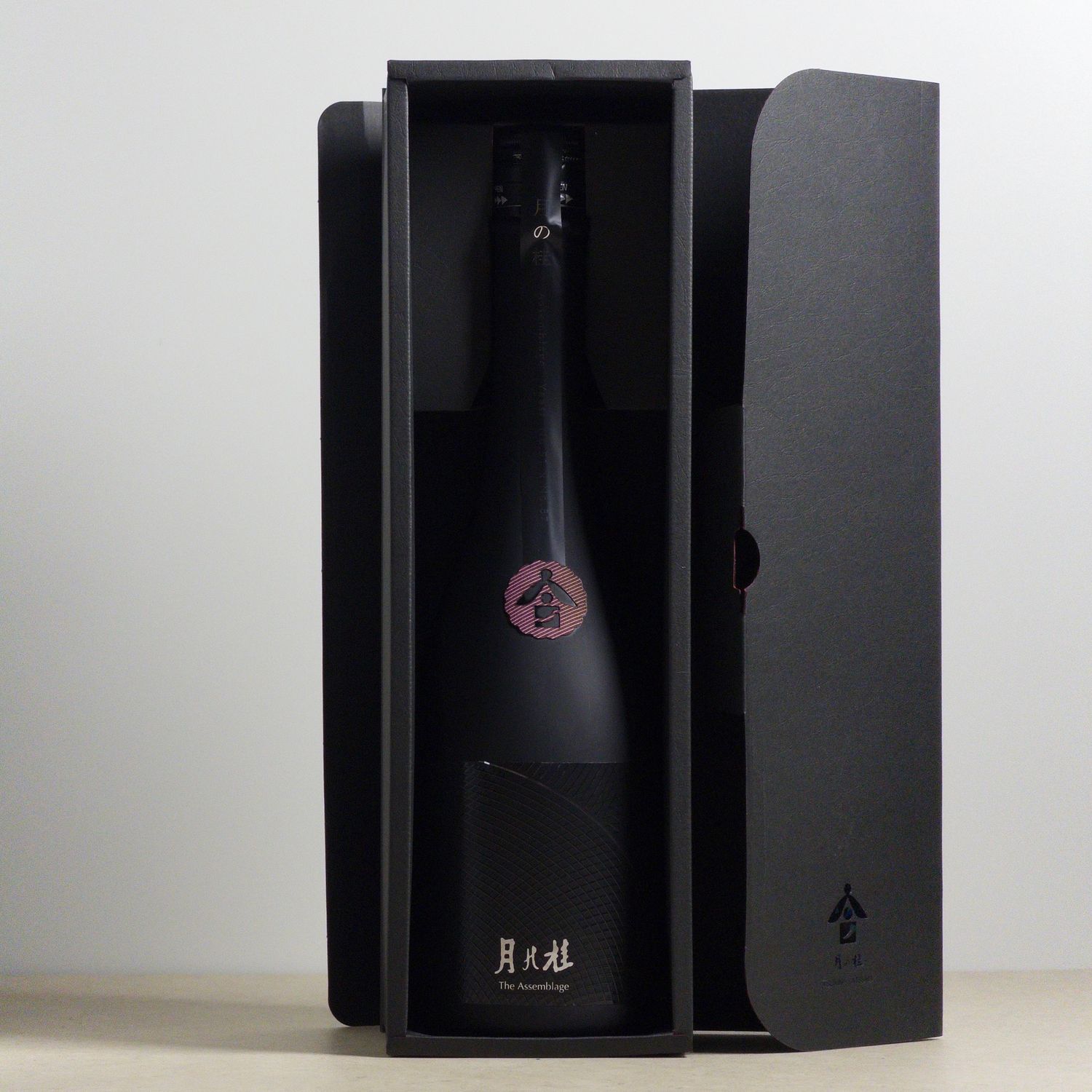
MASUDA TOKUBEE SHOTEN - TSUKINO KATSURA ASSEMBLAGE JUNMAI DAIGINJO
SKU MAS001S720
€ 67,77
Buy and save
Buy and earn € 0,82 Loyalty for your next purchase
Loyalty is a discount program that lets you buy products and earn points to redeem on your next purchase. Your Loyalty balance is updated when you pay online or in-store. The Loyalty amount shown on this page can be recalculated at the checkout.
Size
Please choose
Masuda Tokubee Shoten - Junmai Daiginjo
Estimated delivery time
Pickup: in 4 days
In stock: 6 available
1
MASUDA TOKUBEE SHOTEN - TSUKINO KATSURA ASSEMBLAGE JUNMAI DAIGINJO
Product Details
Brand: Tsuki no Katsura
Brewery: Masuda Tokubee Shoten
Prefecture : Kyoto
Toji: Takuya Nishizawa
Region: Fushimi
Type: Junmai Daiginjo
Rice: Yamada Nishiki
Polishing ratio: 50%
Serving temperature : 5°C - 15°C
Alchohol: 16%
Tasting notes : Layered fruity aromas with hints of ripe banana and a delicate rice undertone. Round and subtle on the palate, with gentle sweetness, savory umami and a fresh finish that balances its richness.
Food pairing : Pairs beautifully with sea bream sashimi, scallop carpaccio or delicately poached lobster. Also lovely with steamed sole or lightly grilled langoustines.
Koji: Yellow
Shubo: Sokujo
Yeast: Kyō no Koi & Kyō no Hana
Water: Fushimi Groundwater / Fushimizu
SMV: N/D
Amino acidity : N/D
NET: 720 ml
Dishes: Fish & Seafood, Salads & Vegetables, Cheese, Sushi & Sashimi
Brewery Information
In Fushimi, Kyoto’s historic sake district, the Masuda family has been brewing sake since 1675. During our visit to Masuda Tokubee Shoten, we met Tokubee Masuda, the fourteenth generation, and his son Junichi Masuda, the fifteenth generation. Their shared philosophy quickly became clear: preserve the knowledge of previous generations while continuing to explore new possibilities.
Tsuki no Katsura — The Assemblage
The Assemblage expresses that curiosity through the art of blending. Two separately brewed sakes, each made with a different Kyoto yeast, are brought together: 80% brewed with Kyō no Koi 京の恋 and 20% with Kyō no Hana 京の華.
For both, the brewery uses Yamada Nishiki grown in Kyoto Prefecture, polished until 50% of the original grain weight remains. This renowned sake rice provides the foundation for a blend that combines aromatic refinement, depth and texture.
Each yeast contributes its own character. Kyō no Koi brings aromatic expression and freshness, while Kyō no Hana adds richness, body and banana-like aromas. The yeasts are therefore not used together in a single fermentation: the separately brewed sakes are carefully blended afterwards.
The Assemblage was developed in collaboration with the Kyoto Municipal Institute of Industrial Technology and Culture. Sensory evaluation was combined with analysis of flavour and aroma compounds to find the proportion in which the two sakes best complement each other.
On the nose, The Assemblage reveals a layered, fruity character, with banana-like aromas and a gentle undertone of rice. The aromatic expression of Kyō no Koi gains additional depth from the richer character of Kyō no Hana.
On the palate, it is round and full-bodied, with a soft, almost creamy texture. A delicate sweetness gives the opening a supple feel, followed by rice umami and savoury nuances that broaden the flavour. Freshness brings tension to this richness and keeps the overall impression lively.
Its character lies in that interplay: fragrant and approachable at the first sip, revealing more structure and depth as you continue tasting. A wine glass gives the combination of fruit, rice and umami room to unfold.
The label translates this interplay into a visual design. Two overlapping wave patterns create movement and depth, reflecting the two sakes and the complexity that emerges from their combination.
Serve in a wine glass to allow the aromas to develop. Its rounded structure pairs beautifully with roast chicken, mushroom risotto, pork with a creamy sauce, or pizza with mushrooms and aged cheese.
The Water of Fushimi
Water is an important part of the brewery’s identity. Fushimi is historically associated with 伏水, meaning “hidden water”: the groundwater flowing beneath this part of Kyoto. Tsuki no Katsura draws its brewing water from a well approximately seventy metres deep.
This water contains fewer minerals than the famously hard brewing water of Nada. It contributes to the rounded texture and gentle mouthfeel associated with Fushimi sake, providing a foundation for a style in which aromatic expression and richness remain balanced.
A Name Rooted in Culture
The brand name Tsuki no Katsura, “the katsura tree on the moon”, refers to a poem by the court noble Ayanokōji Arinaga, who had connections with the Masuda family. Situated along the historic Toba Kaidō road, the house became a meeting place for court nobles, writers and calligraphers. Sake, literature and art have been intertwined here for centuries.
The brewery’s emblem also contains a playful detail. Turn it upside down and you can make out rabbit ears, a reference to the rabbit that inhabits the moon in Japanese folklore. It connects the house’s visual identity with the poetic world behind its name.
From Doburoku to Sparkling Nigori
One of the brewery’s most important innovations was its sparkling nigori sake. For centuries, people in Japan drank doburoku: a cloudy fermented rice drink in which the rice solids remain. In 1899, the government prohibited home brewing, severely restricting this domestic brewing tradition.
The thirteenth generation of the Masuda family later sought a way to preserve doburoku’s cloudy, lively character within the legal requirements for sake. Working with the relevant authorities, the brewery developed a method of coarse filtration. This retained some rice solids while allowing the drink to be legally sold as sake.
In 1964, Tsuki no Katsura released its sparkling nigori. It gave doburoku’s character a new expression and established a style that became an important part of the brewery’s identity.
Koshu: Giving Sake Time
The same curiosity can be found in its koshu, or long-aged sake. During our visit, we saw more than a hundred porcelain jars in the brewery’s attic, where sake develops slowly over many years.
This practice began in 1965, inspired by the Honchō Shokkan, a Japanese culinary encyclopaedia published in 1695. The jars are sealed with paulownia wood, Japanese paper and lacquer. During maturation, the sake’s colour, aromas and flavours deepen.
A distinctive expression is Kohakukō, “amber light”, named after the colour of the aged sake. Some jars contain sake more than fifty years old. We also discovered a collaboration with Onkyo, in which sound vibrations are transmitted directly into the sake to investigate their possible influence on maturation.
From sparkling nigori and long-aged koshu to the careful blending behind The Assemblage, Tsuki no Katsura continues to find new expressions for the knowledge accumulated over centuries.
The Assemblage brings that philosophy together in one bottle: Kyoto-grown Yamada Nishiki, two Kyoto yeasts, and a carefully considered interplay of aroma, texture and depth.
Display prices in:EUR