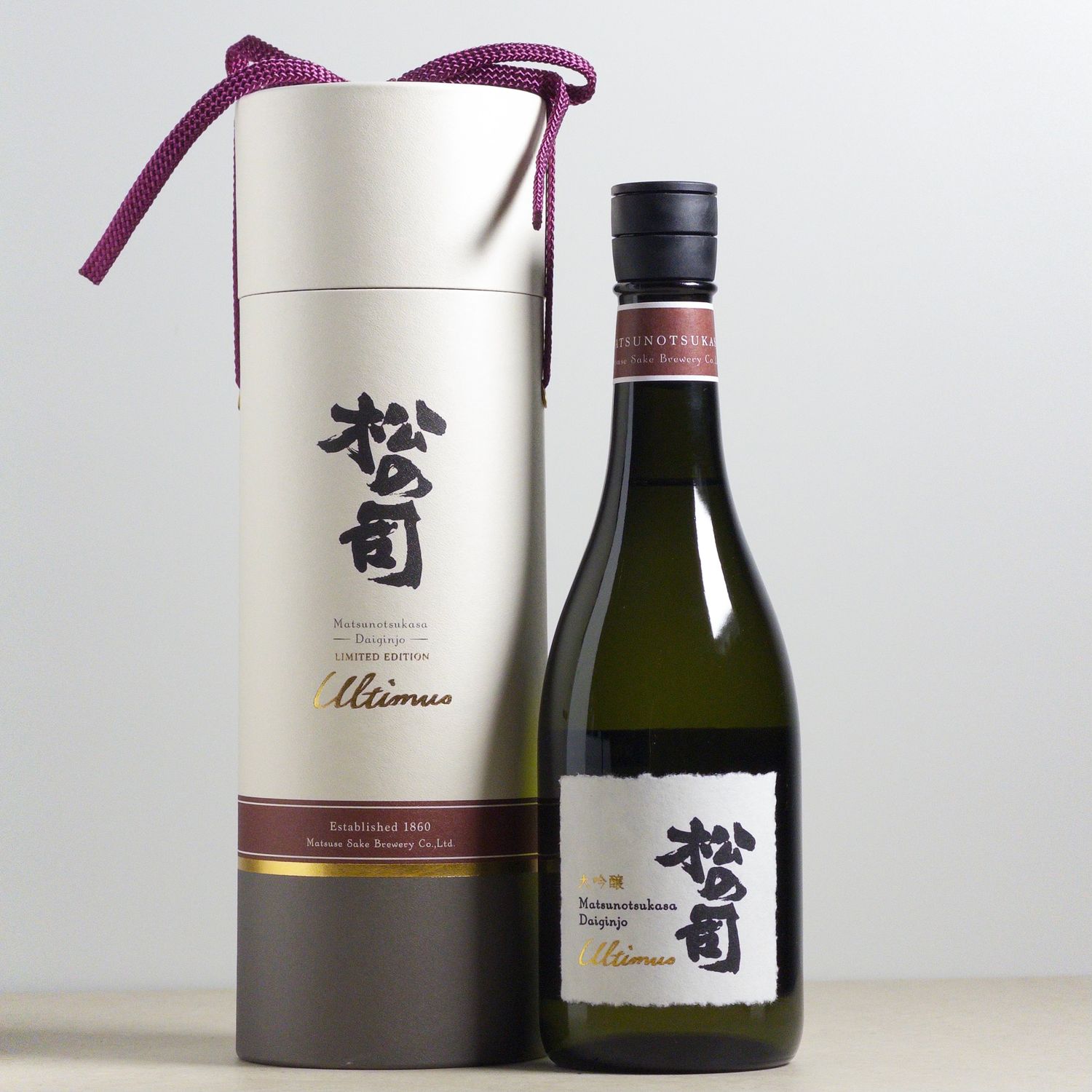
MATSUSE - MATSUNOTSUKASA ULTIMUS DAIGINJO
SKU MAT005S720
€ 65,29
Buy and save
Buy and earn € 0,79 Loyalty for your next purchase
Loyalty is a discount program that lets you buy products and earn points to redeem on your next purchase. Your Loyalty balance is updated when you pay online or in-store. The Loyalty amount shown on this page can be recalculated at the checkout.
Size
Please choose
Matsuse - Daiginjo
Estimated delivery time
Pickup: in 3 days
In stock: 5 available
1
MATSUSE - MATSUNOTSUKASA ULTIMUS DAIGINJO
Product Details
Brand: Matsunotsukasa
Brewery: Matsuse Shuzo
Prefecture : Shiga
Toji: Keizo Ishida
Region: Ryuou
Type: Daiginjo
Rice: Yamada Nishiki
Polishing ratio: 30%
Serving temperature : 5°C-20°C
Alchohol: 16%
Tasting notes : Subtle aromas of peach, muscat grapes and apricot, with a soft, creamy nuance. Pure and smooth on the palate with a delicate sweetness.
Food pairing : Pairs well with risotto with green asparagus, poached chicken with a light cream sauce, ravioli with ricotta and lemon, or an omelet with soft mushrooms.
Koji: Yellow
Shubo: Sokujo
Yeast: Kumamoto-kobo, Kyokai-kobo 18
Water: Echi River
SMV: N/D
Amino acidity : N/D
NET: 720 ml
Dishes: Sushi & Sashimi, Fish & Seafood, Salads & Vegetables
Brewery Information
In Ryuo, in Shiga Prefecture, east of Lake Biwa, Matsuse Shuzo has been brewing sake under the name Matsunotsukasa since 1860. Rice fields, rivers and mountains surround a brewery where provenance and careful craftsmanship take centre stage.
Lake Biwa is Japan’s largest freshwater lake and lies at the heart of Shiga. Around it, agricultural landscapes reflect a centuries-old connection between water and rice cultivation. This setting provides context for Matsuse Shuzo’s attention to its natural surroundings. For Ultimus, the brewery also looks beyond its own prefecture, sourcing rice from Tojo, in Hyogo.
During our visit, we were particularly impressed by tōji Keizo Ishida’s explanation of the soil and underlying geology. He showed us the importance of looking beyond the rice variety alone. Growing conditions, water, the farmers’ work and decisions made during brewing all contribute to the final character.
Matsunotsukasa Daiginjo Ultimus
Ultimus is presented by Matsuse Shuzo as the pinnacle of its range. Its name refers to the Latin word from which ‘ultimate’ derives, fitting for a sake that brings together the brewery’s accumulated knowledge and experience.
For this bottling, Matsuse Shuzo uses top-grade Yamada Nishiki from Tojo, in Hyogo. This renowned Toku-A district, also known as Special A, ranks among the most highly regarded origins for this sake rice. The grains are carefully polished to 30% of their original weight.
The brewery uses Kumamoto yeast and Kyokai yeast No. 18, among others, for this sake.
Ultimus is a Daiginjo. In this style, a limited amount of brewer’s alcohol is added, a technique that can help release aromas and refine the structure.
The low polishing ratio tells only part of the story. Rice preparation, kōji development and the management of fermentation determine how all the elements come together.
For us, this reveals the fifth ingredient: the brewer’s hand. It is the experience of Keizo Ishida and his team that guides the raw materials and gives this refined sake its individual character.
Matsuse Shuzo’s Daiginjo sakes typically mature for more than a year before leaving the brewery. Ultimus consequently combines a composed, rounded character with a freshness reminiscent of young sake.
This time allows the different elements to integrate. The result finds its strength in harmony, clarity and a flavour that gradually unfolds.
The aromas are initially restrained. In the brewery’s own tasting, peach, Muscat grape and apricot are noted, alongside a subtle milky, creamy nuance.
On the palate, Ultimus opens clean and gentle, before gaining volume. Delicate sweetness and fine acidity balance one another. The finish gradually fades, leaving a lingering, refined impression. Its expression may vary between bottlings.
Serve lightly chilled in a spacious wine glass and allow it to open gradually, giving its subtle aromas and layered texture room to develop.
We would pair Ultimus with steamed sole with a light dashi butter sauce, scallops with cauliflower purée, langoustines or crab chawanmushi.
Delicately sliced white fish sashimi also suits its understated character. Choose preparations that highlight gentle textures and pure flavours, allowing the sake’s finesse to shine.
Display prices in:EUR