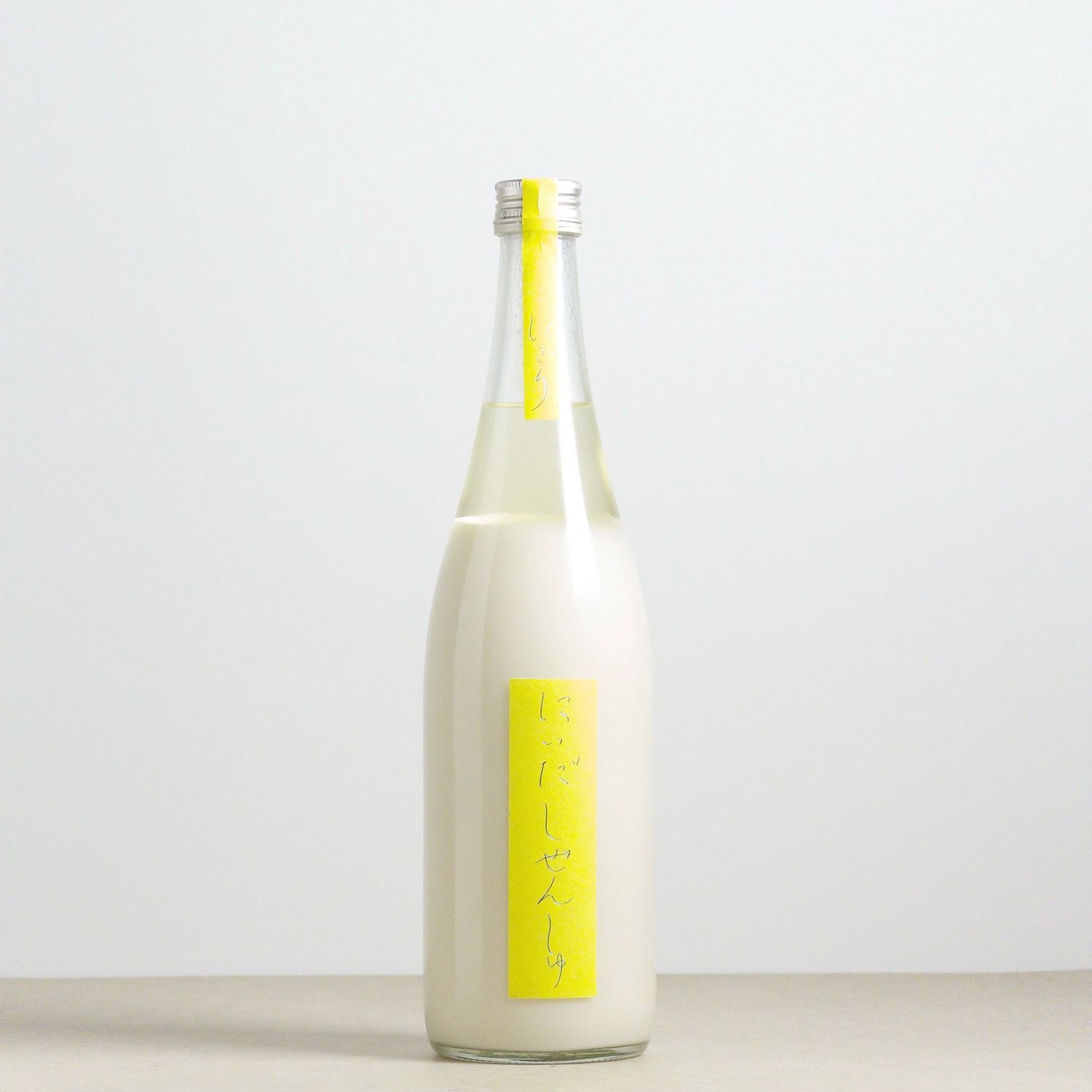
NIIDA HONKE - SHIZENSHU NIGORI JUNMAI KIMOTO
SKU NII004S720 - Base
€ 36,36
Sold out
Size
Please choose
Niida Honke - Junmai Kimoto Nigori
Sold out
NIIDA HONKE - SHIZENSHU NIGORI JUNMAI KIMOTO
Product Details
Brand: Shizenshu
Brewery: Niida Honke
Prefecture : Fukushima
Toji: Yasuhiro Niida
Region: Koriyama
Type: Junmai Kimoto Nigori
Rice: Toyo Nishiki
Polishing ratio: 90%
Serving temperature : 5°C - 45°C
Alchohol: 16%
Tasting notes : Soft sweet-tart with notes of yogurt and mochi, followed by a creamy umami and silky texture. Fresh sourness and delicate sweetness provide balance and a long, soft finish.
Food pairing : Delicious with spicy dishes such as curries and kimchi, with rich preparations such as BBQ ribs, stewed beef and miso, with fried snacks such as karaage and tempura, and with creamy desserts
Koji: Yellow
Shubo: Kimoto
Yeast: Yasei Kobo
Water: Takenouchi well water & Mizunuki Spring water
SMV: +3
Amino acidity : N/D
NET: 720 ml
Dishes: Salads & Vegetables, Fish & Seafood, Cheese, Dessert
Brewery Information
Niida Honke in Fukushima is a pioneer in sustainable sake production. The brewery was founded in 1711 and has been committed for generations to its mission: “to be a sake brewery that protects Japan’s rice fields.”
In 1967, the brewery launched the 'Shizenshu' label, Japan’s first official Junmai sake made with naturally cultivated rice. Today, Niida Honke works exclusively with 100% naturally grown rice, without pesticides or chemical fertilizers, and produces only junmai sake with the help of wild yeast (Yasei Kobo). Since 2013, all sake has also been brewed according to the traditional kimoto method.
And in 2025, Niida Honke became the first brewery in Japan to achieve Regenerative Organic Certification (ROC) for its own rice fields. This recognizes their commitment not only to working sustainably, but to actively contributing to the restoration of soil, biodiversity, and the ecosystem.
As 18th-generation brewer Odahiko Niida puts it:
“We do not make sake — we let it come into being.”
For their brewing water, they use two different natural sources depending on the desired profile:
- Takenouchi spring (medium-hard water), sourced near their rice fields
- Mizunuki spring (soft water), sourced from their own mountain
While most sake in Japan is fermented using the classic sandan-jikomi (three-stage fermentation), Niida Honke has used its own method since 1967: Kumidashi Yodan Jikomi.
With this technique, part of the fermenting moromi is separated, enriched with steamed rice, and further saccharified before being added back to the main fermentation. This fourth step draws even more depth, umami, and complexity from the rice.
After fermentation, the moromi is finely ground with a traditional stone mill and reincorporated into the sake. This creates ultra-fine rice particles that deliver an exceptionally creamy, full, and soft texture. The result is a Nigori that feels rich and velvety, with remarkable purity and elegance.
On the palate, it is rich, creamy, and silky smooth, with a beautiful balance of natural sweetness, fresh acidity, and gentle bitterness. The yogurt- and coconut-like nuances are supported by notes of fresh rice and a high-acidity structure derived from the kimoto method and Kumidashi Yodan Jikomi, flowing harmoniously together with the soft, airy sweetness of koji.
Despite its full-bodied character, this sake remains lively and refined, with a long, clean finish.
Serve well chilled for a fresh, creamy, and vibrant experience. Light warming can also be particularly interesting, as it further enhances the fruity aromas.
Display prices in:EUR