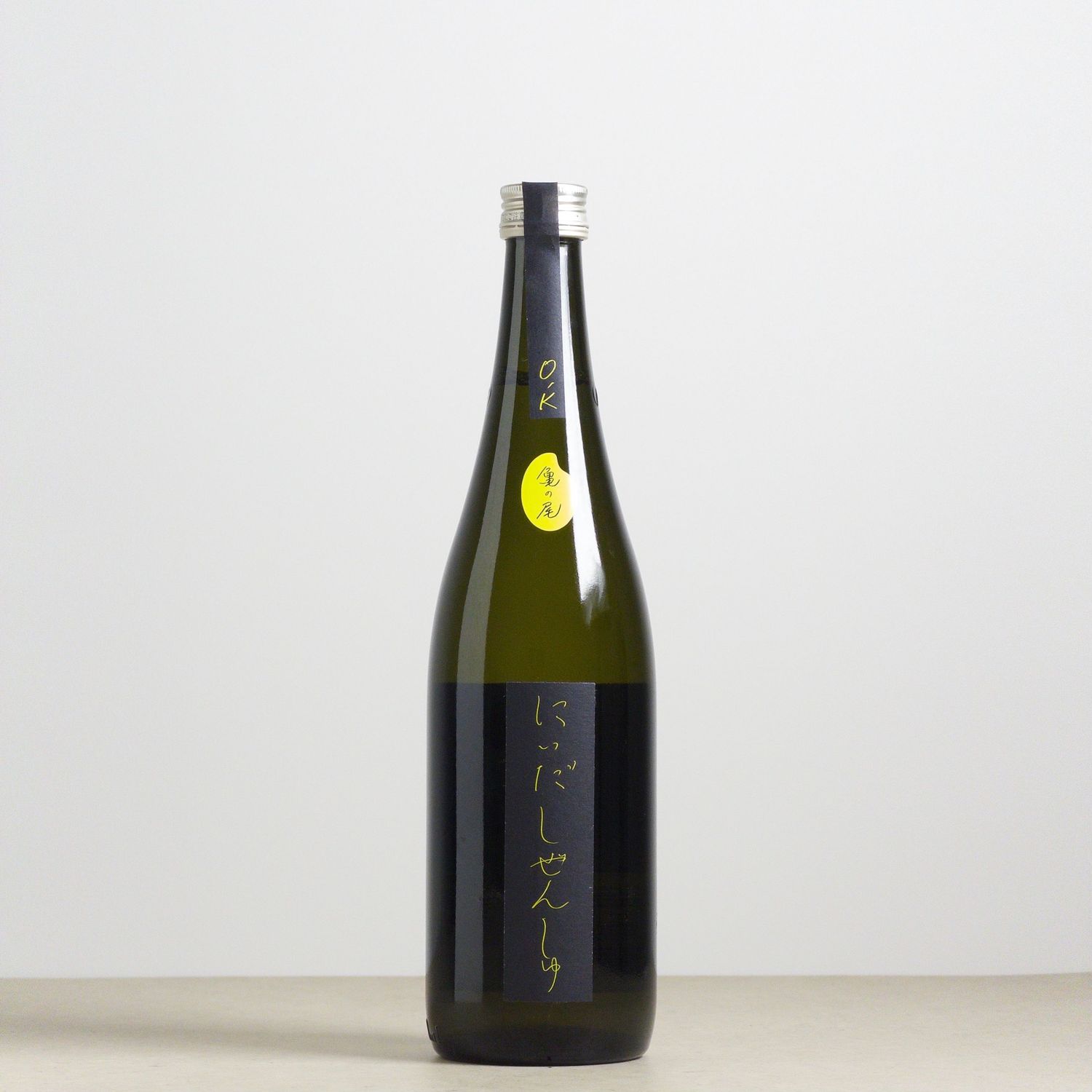
NIIDA HONKE - SHIZENSHU OK KAME NO O JUNMAI KIMOTO
SKU NII005 - Base
€ 37,19
Buy and save
Buy and earn € 0,45 Loyalty for your next purchase
Loyalty is a discount program that lets you buy products and earn points to redeem on your next purchase. Your Loyalty balance is updated when you pay online or in-store. The Loyalty amount shown on this page can be recalculated at the checkout.
Size
Please choose
Niida Honke - Junmai Kimoto - Ok Kamenoo
Estimated delivery time
Pickup: in 3 days
In stock
1
NIIDA HONKE - SHIZENSHU OK KAME NO O JUNMAI KIMOTO
Product Details
Brand: Shizenshu
Brewery: Niida Honke
Prefecture : Fukushima
Toji: Yasuhiko Niida
Region: Koriyama
Type: Junmai Kimoto
Rice: Kamenoo
Polishing ratio: 85%
Serving temperature : 15°C - 40°C
Alchohol: 16%
Tasting notes : The nose reminds you of yogurt with a fresh citrus hint, light sweetness and a subtly roasted accent of wood. In the mouth it is silky soft with lively acids, fresh citrus, a light wood note.
Food pairing : Tempura of fish, grilled seasonal vegetables, sea bass in salt crust, grilled cockles
Koji: Yellow
Shubo: Kimoto
Yeast: Yasei Kobo
Water: Takenouchi well water & Mizunuki Spring water
SMV: +1
Amino acidity : N/D
NET: 720 ml
Dishes: Salads & Vegetables, Meat & Poultry, BBQ & Grill, Warm Sake
Brewery Information
Niida Honke in Fukushima is a pioneer in sustainable sake production. The brewery was founded in 1711 and has been committed for generations to its mission: “to be a sake brewery that protects Japan’s rice fields.”
In 1967, the brewery launched the 'Shizenshu' label, Japan’s first official Junmai sake made with naturally cultivated rice. Today, Niida Honke works exclusively with 100% naturally grown rice, without pesticides or chemical fertilizers, and produces only junmai sake using wild yeast (Yasei Kobo). Since 2013, all of their sake has also been brewed according to the traditional kimoto method.
And in 2025, Niida Honke became the first brewery in Japan to achieve Regenerative Organic Certification (ROC) for its own rice fields. This recognizes their commitment not only to working sustainably, but also to actively contributing to the restoration of soil, biodiversity, and the ecosystem.
Their main label, “SHIZENSHU,” is made with naturally cultivated rice. For this expression, they use 'Kame No O' rice, naturally grown by Tsuchiya Farm in Inawashiro (Fukushima), along with wild yeasts from the brewery, brewed with the medium-hard water of the Takenouchi spring, sourced near their rice fields.
As 18th-generation toji Odahiko Niida puts it:
“We do not make sake — we let it come into being.”
The brewery is also currently working on fermentation projects in Kioke wooden vats, made from cedar wood from their own mountain. Their vision for the future is clear: to evolve into a fully self-sufficient brewery, including generating their own energy.
While most sake is made using the classic sandan-jikomi (three-stage fermentation), this sake uses Niida Honke’s unique method: Kumidashi Yodan Jikomi. In this process, part of the fermenting mash (moromi) is set aside, enriched with steamed rice and further saccharified, then added back into the main fermentation. This technique, used since 1967, draws the maximum out of the rice and creates a rich, distinctive flavor found nowhere else.
The brewery’s original “Kumidashi Yodan Jikomi” method (four-stage fermentation) creates a layered expression, and in combination with the microorganisms living in the wooden fermentation vat, contributes to a rustic and characterful profile.
The opening is silky-soft and smooth, followed by a lively acidity that refreshes the palate. Notes of citrus, a light cooling sensation, a subtly bitter wood touch, and a refined yogurt-like nuance flow together harmoniously. Despite its fresh and energetic character, this sake has remarkable depth and layering. The finish is soft, elegant, and long, with a clean finale that slowly fades away. Compared to the Aikoku, which is wilder, more powerful, and sharper, the Kame No O presents itself with more definition and structure: rounder, more harmonious.
“The reason we use wooden vats is to protect the forest,” says the brewer. By creating a cycle of harvesting, thinning, and replanting, they support the forest’s natural regeneration and strengthen its water retention capacity and biodiversity — a philosophy that can be felt in every sip.
Display prices in:EUR