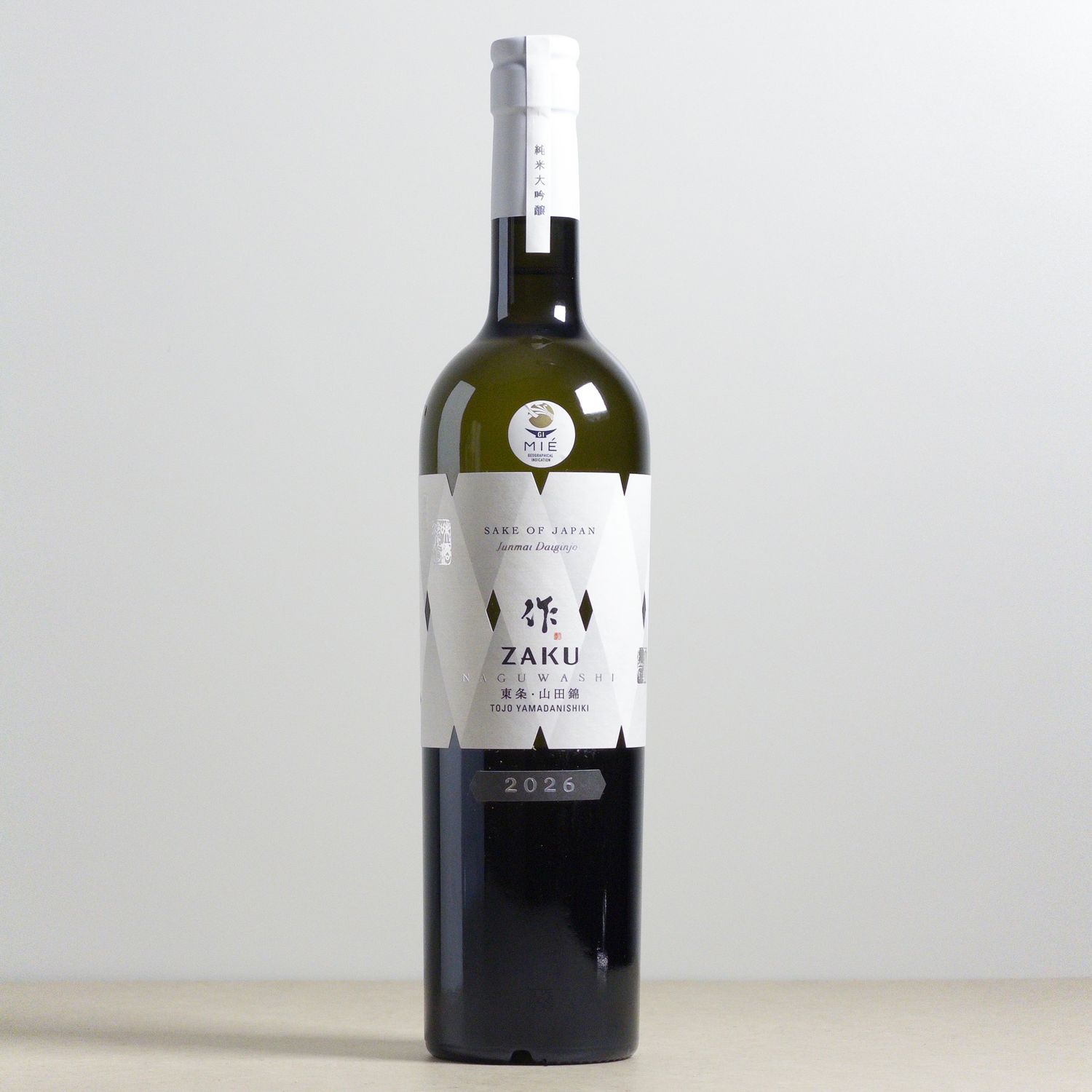
ZAKU - NAGUWASHI TOJO JUNMAI DAIGINJO
SKU SHI003S750
€ 79,34
Buy and save
Buy and earn € 0,96 Loyalty for your next purchase
Loyalty is a discount program that lets you buy products and earn points to redeem on your next purchase. Your Loyalty balance is updated when you pay online or in-store. The Loyalty amount shown on this page can be recalculated at the checkout.
Size
Please choose
Zaku - Junmai Daiginjo
Estimated delivery time
Pickup: in 3 days
In stock: 12 available
1
ZAKU - NAGUWASHI TOJO JUNMAI DAIGINJO
Product Details
Brand: Naguwashi
Brewery: Shimizu Seizaburo Shoten
Prefecture : Mie
Toji: Tomohiro Uchiyama
Region: Suzuka city
Type: Junmai Daiginjo
Rice: Yamada Nishiki
Polishing ratio: 45%
Serving temperature : 5°C - 15°C
Alchohol: 15%
Tasting notes : Elegant aromas of white peach, pear and jasmine. Silk-like and soft in the mouth, with a refined sweetness and delicate freshness. The finish is long, pure and harmonious.
Food pairing : Perfectly pairs with coquilles with beurre blanc, lobster with butter, steamed tarbot, or crab with a fresh citrus accent. Also great with sushi of white fish and fresh elegant salads.
Koji: Yellow
Shubo: Sokujo
Yeast: Kuratsuki Kobo
Water: Suzuka Mountain water
SMV: +1
Amino acidity : N/D
NET: 750 ml
Dishes: Fish & Seafood, Salads & Vegetables, Sushi & Sashimi
Brewery Information
In Suzuka, in Mie Prefecture, Shimizu Seizaburo Shoten produces sake under the name ZAKU. Meaning ‘to make’ or ‘to create’, the name reflects the belief that everyone contributes to the final experience, from the brewers to those who sell, serve and drink the sake.
We were invited by president Shinichiro Shimizu and master tōji Tomohiro Uchiyama for a special visit. During the tour and tasting, we discovered how they combine traditional craftsmanship with contemporary tastes. Their attention to precision, depth and a clean finish particularly stayed with us.
We also visited Ise Jingu Shrine with the president. It was a memorable experience that brought us closer to the people and cultural background behind ZAKU.
Naguwashi: Four Regions, Four Stories
The Naguwashi series explores four Japanese rice-growing regions: Suzuka, Iga, Tojo and Sayo. Its name comes from an ancient Japanese word praising the beauty and noble character of a landscape. Each bottling highlights the rice and origins of one particular area.
This edition introduces Tojo, in Hyogo Prefecture. It ranks among the most prestigious growing areas for Yamada Nishiki and belongs to the renowned Toku-A, or Special A, districts. Its rice is particularly prized by premium sake brewers. A prehistoric lake and millions of years of geological change shaped the ground beneath this landscape.
ZAKU Naguwashi Tojo Yamadanishiki Junmai Daiginjo
This sake is brewed exclusively with Yamada Nishiki grown in Tojo, polished to 45% of its original grain weight. The rice variety was developed by crossing Yamadaho and Tankan Wataribune and received its name in 1936. At 15% alcohol, this Junmai Daiginjo is refined, aromatic and silky.
Why the Distinctive Bottle?
Designer Yasushi Uemura created the presentation with fine-dining restaurants and their wine lists in mind. The design references shide, the zigzag-shaped paper streamers marking sacred spaces at Shinto shrines, and origata, the Japanese art of ceremonial paper folding.
The folded forms express respect for the land, tradition and craftsmanship. The presentation tells the same story as the sake itself.
Aromas of white peach, pear and jasmine lead into a silky palate. Delicate sweetness and refreshing tension balance one another, followed by a long, clean finish.
Serve lightly chilled in a spacious wine glass, allowing the aromas to unfold gradually.
Pairs beautifully with scallops with a light beurre blanc, steamed turbot, lobster or delicate crab dishes. Pure ingredients and subtle sauces allow its delicate fruitiness and soft texture to shine.
Display prices in:EUR